The Economist
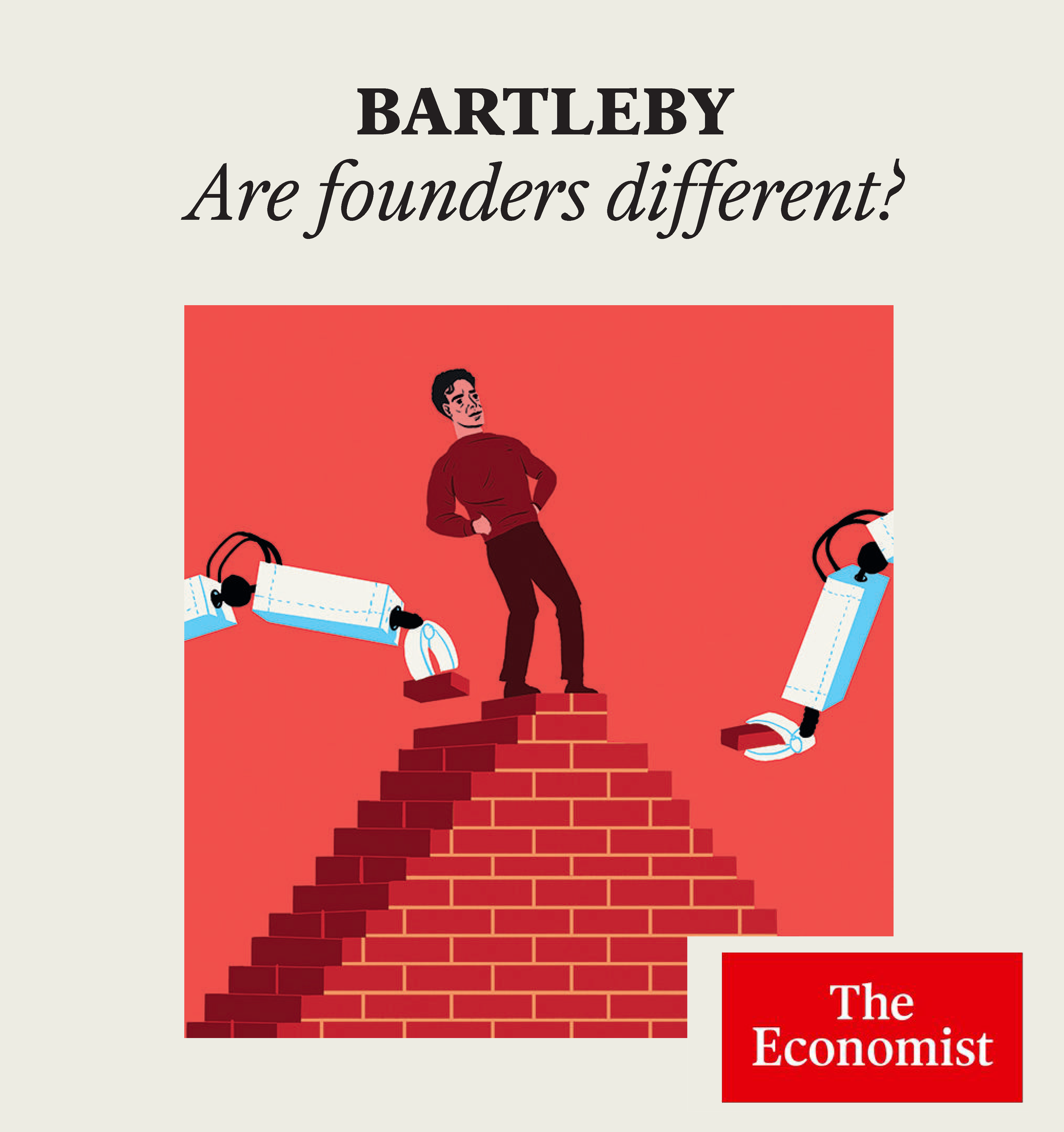
Featured in The Economist's Bartleby column, our research uses AI to analyse the digital footprints of founders in over twenty-one thousand global startups. The data reveals the specific personality traits such openness to novelty and risk appetite that distinguish successful founders from successful employees in the broader workforce.
Related coverage of this research can also be found in The Times (UK), Forbes, Fast Company and Business Insider.
The Personality Blueprint of Successful Founders
Read The Economist feature: “Are Founders Different?”
Nature
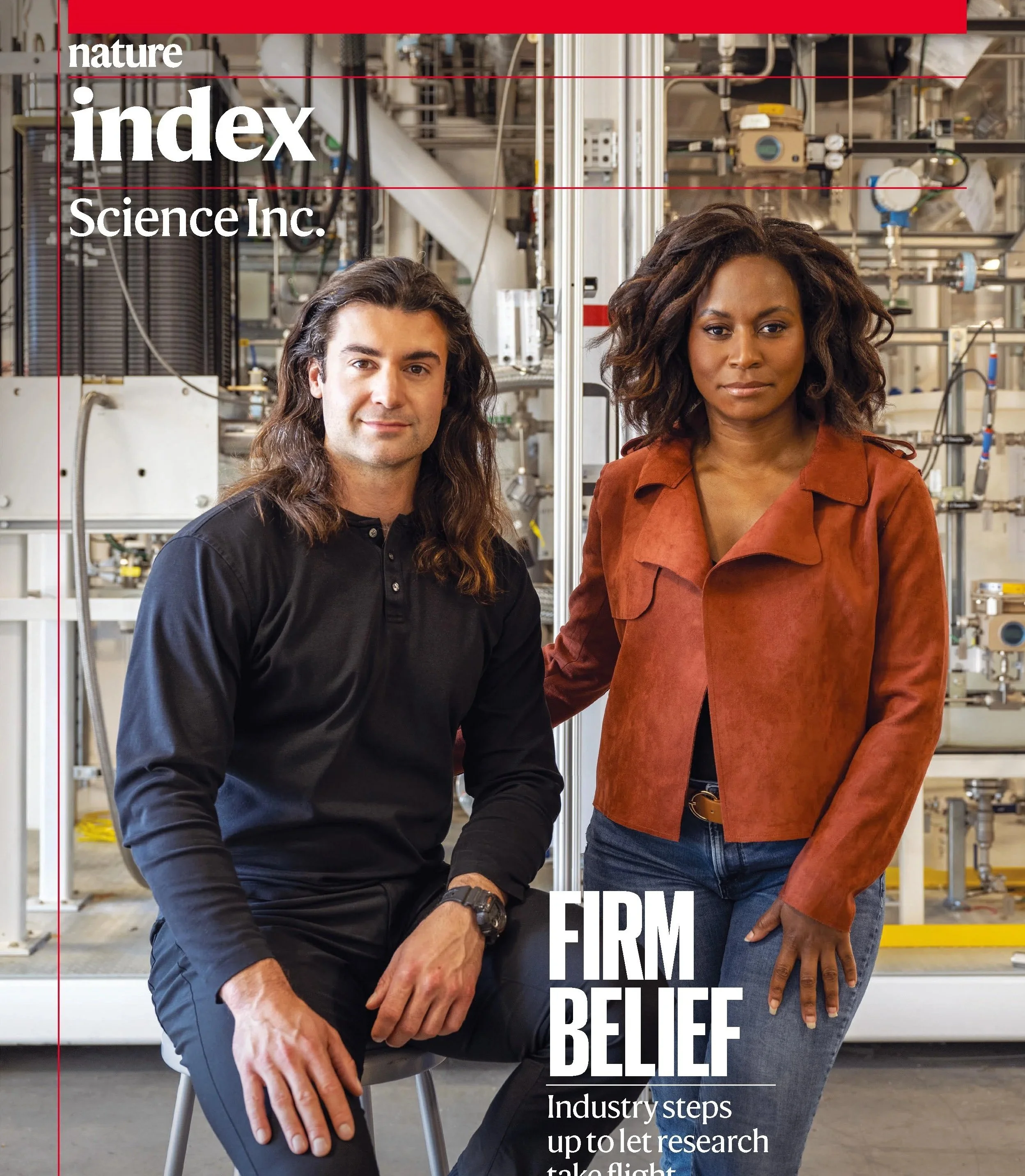
Featured in the Nature Index "Science Inc." special issue, our analytics uses machine learning to model the global landscape of corporate R&D across 35,000 recent papers. Rather than relying on legacy disciplines, the algorithm analyses multidimensional paper-level embeddings to reveal the twenty distinct scientific frontiers driving industry today. The published data highlights the specific fields, such as targeted therapies and vaccine development, where corporate labs heavily lead research output compared to their academic and government peers.
The complete model, revealing all twenty sub-frontiers and the specific companies leading each one, can be explored directly through our online visualization.
Map of Global Corporate Research
Explore the interactive map
Global Patterns in Corporate Research
Read the Science Inc. Nature Index Magazine (pdf)
Bloomberg
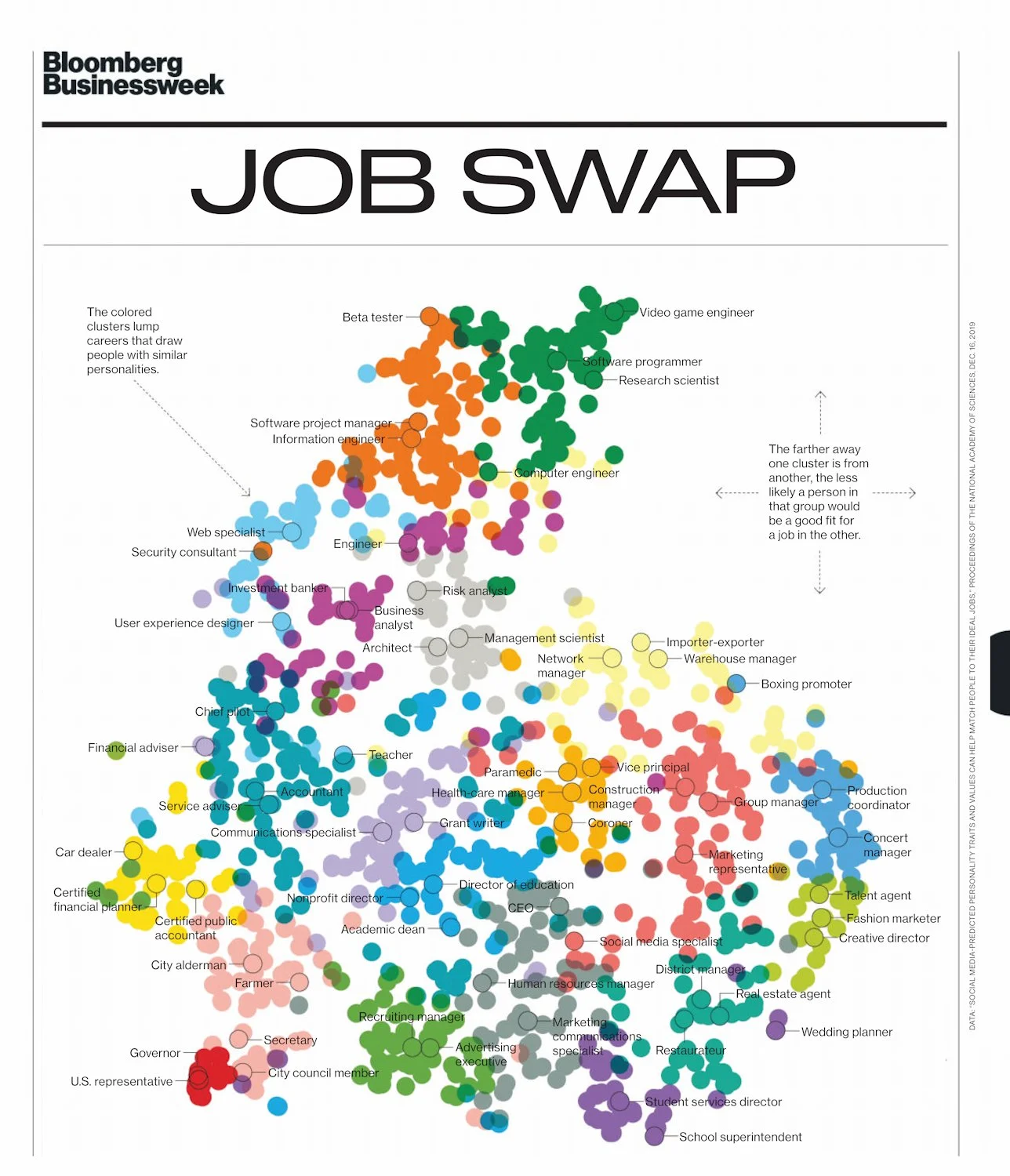
Featured in Bloomberg Businessweek, League of Scholars co-authored a massive data mapping project analysing the digital footprints of professionals across 3,500 distinct occupations. The research proves that using AI to assess underlying psychological traits provides a powerful, data-driven framework for identifying hidden talent and matching individuals to highly successful career paths.
Personality-aligned Career Transitions "The Smarter Second Act"
Read about our occupation-personality fit research in Bloomberg Businessweek
Nature
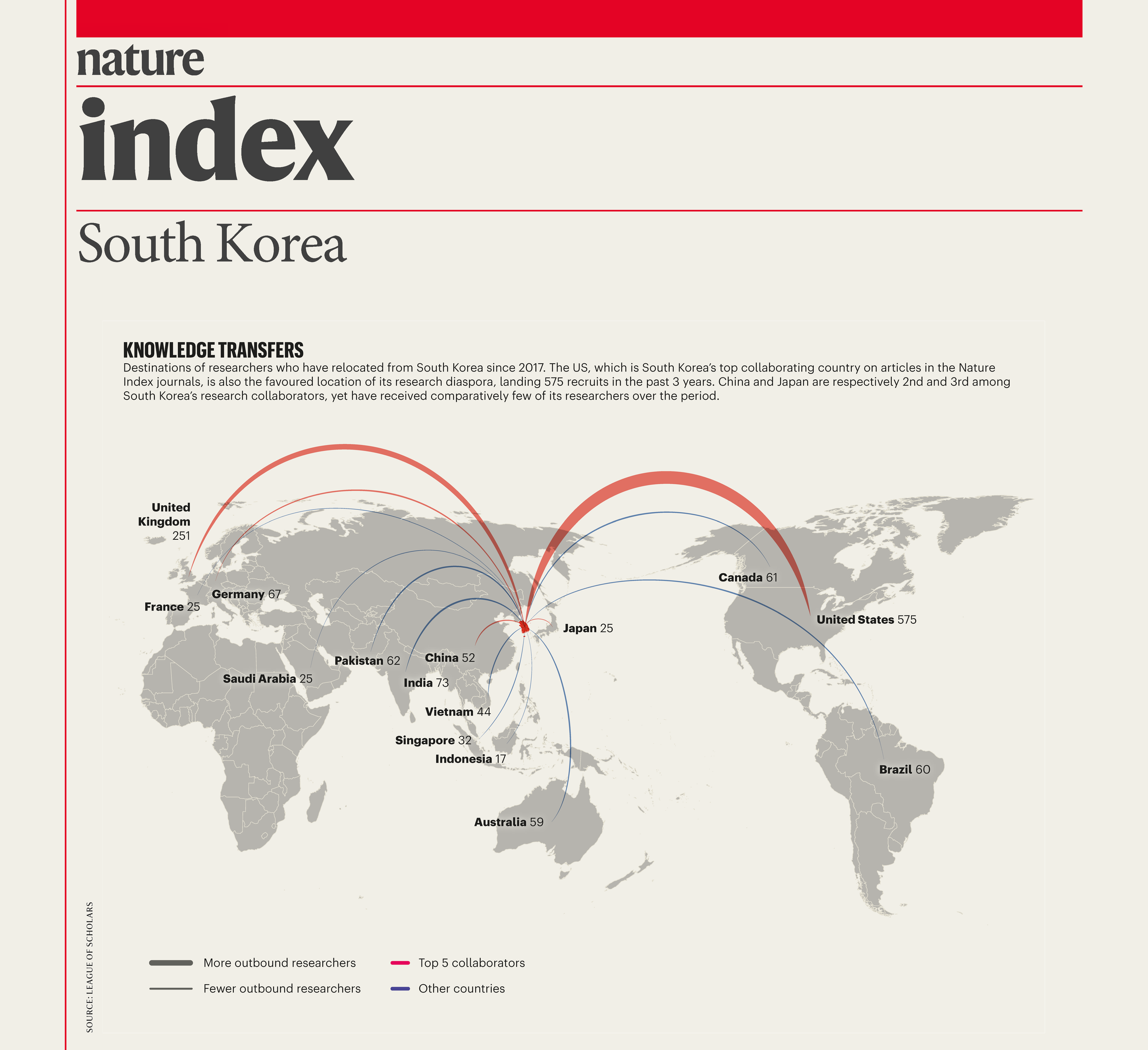
How does international mobility affect scientific output? Nature Index used League of Scholars' proprietary data set to track over 2 million researchers globally and demonstrate that "border-crossing" scientists have a significantly higher output and impact factor than those who remain stationary.
Tracking the Mobility of Global Scientific Talent
Read the article in the Nature Index Magazine (pdf)
The Australian
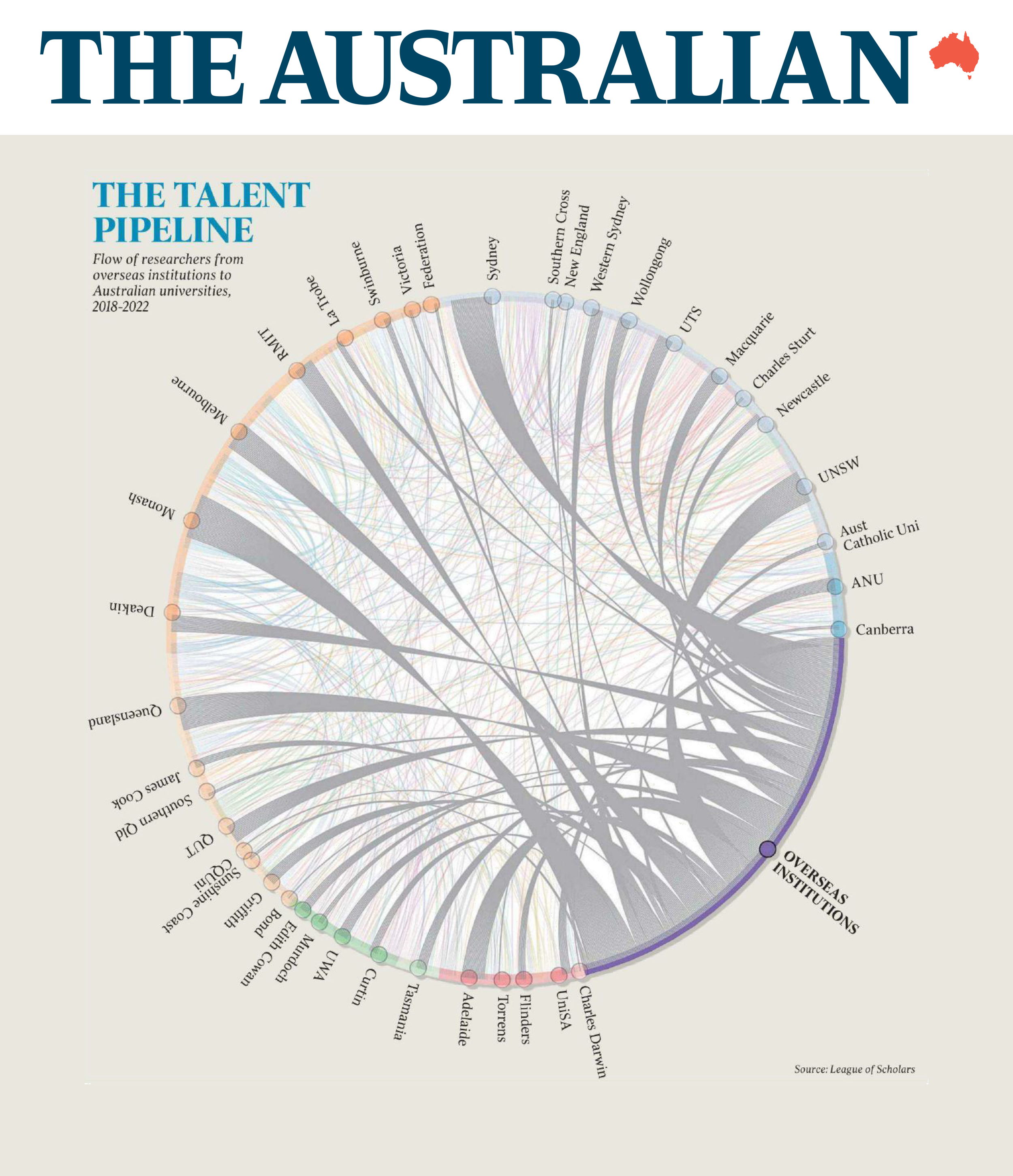
In an op-ed for The Australian, League of Scholars CEO Paul McCarthy breaks down the multifactor data driving higher education success. The analysis shows a direct, predictive correlation between overseas talent acquisition, revenue growth, and long-term global university rankings.
The Data Behind Rising University Rankings
Read the article “The Rise and Rise of Australian Universities” (pdf)
RESEARCH Magazine